We are introducing our new Nebula Resident Fellow, Gracielle Higino! Gracielle joined us in February to support the coordination and delivery of our 2026 NASA-Nebula Open Science training cohorts.
After a period of onboarding, Gracielle is already killing it and doing a great job with all the cohort-related tasks, and also cheering Sara weekly!
Welcome to the OLS team Gracielle!
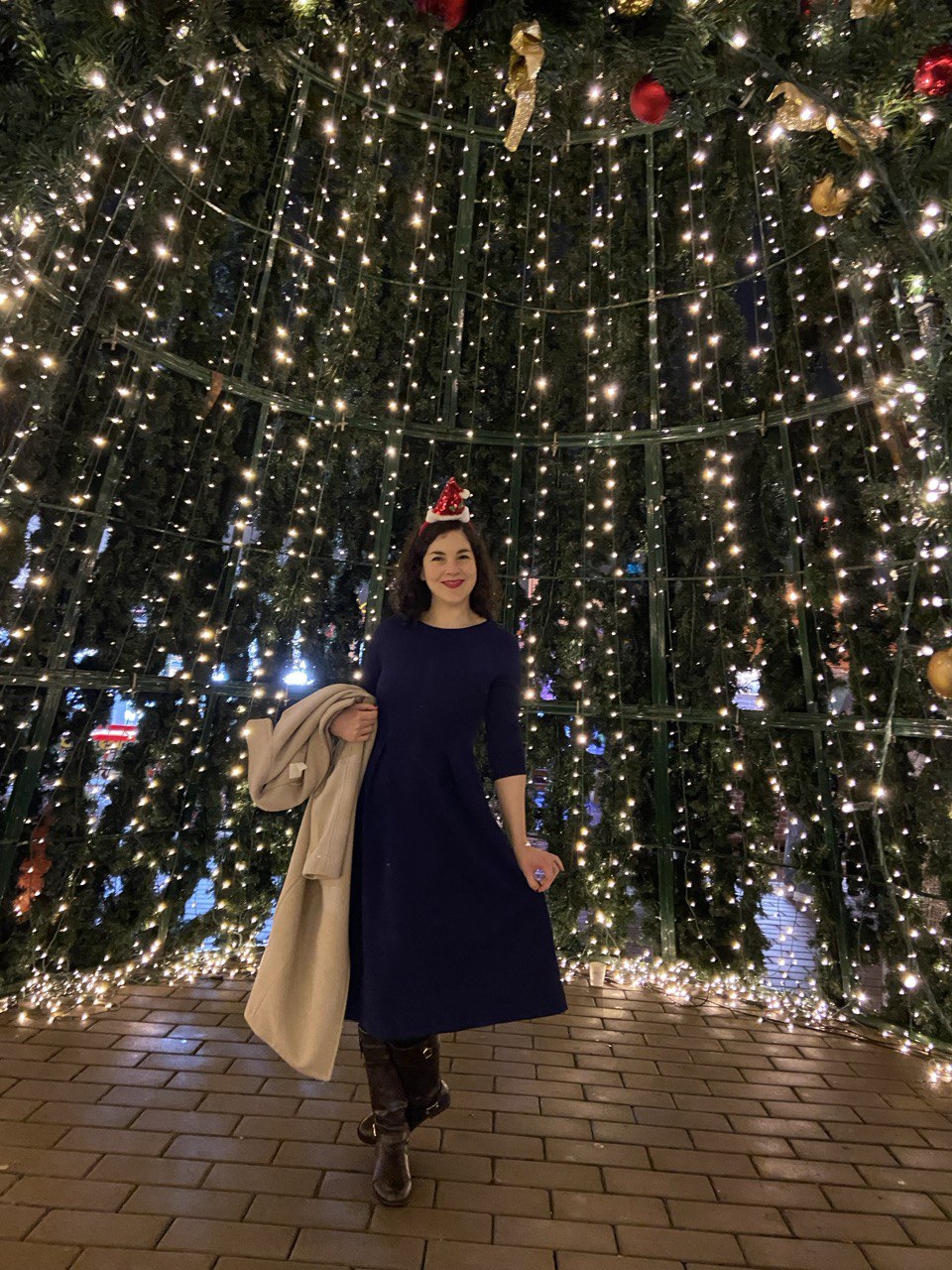
Name: Gracielle Higino
Role in OLS: Nebula Resident Fellow
Contact if people want to have a chat? contact at gracielle dot science.
Socials: gracielle.science on Bluesky.
Questions about OLS
What do you like about the OLS community? What makes it ‘different’?
The OLS community has grown in a very beautiful way! We’ve got a truly diverse set of people who really care about each other and are really knowledgeable about open science and anything related to that. I’m always amazed by the depth of the discussions we have and how generous people are in sharing their knowledge. What makes this community outstanding is that it is guided by values that filter out the bad stuff and which always put people front and center. By valuing people first, OLS has thrived in building a sustainable community of people united by the same principles. I feel really lucky to be in it!
What are your interests besides your OLS work?
I am a nerdy computational ecologist passionate about macroecology of interactions and evolution! I do love to think about how ecological interactions play a role in determining where species are and how we can use this to solve problems in biodiversity conservation. I would flip through a book about evolution anytime, discuss adaptation hypotheses during breakfast and marvel at biochemistry facts and how the human body came to be.
Questions about you and your interest
What skill/expertise do you have in the open science world? How did you learn it?
The first thing I learned in the open science world was how to find open access papers. In Brazil we are huge fans of SciELO and it was my first contact with the open science world when I was still in high school. Then when I was an undergraduate I was mentored by the amazing professor Marcos Vital, who encouraged me to learn programming in R for reproducible research and to get involved in the Mozilla Open Leaders program, which was a pivoting point in my career. Through this experience I learned important skills in community management and project management focused on open projects that are the foundation of what I do today. I developed a strategic thinking that I applied in different areas of my career, and was reflected on anything that I do, such as comprehensive documentation, EDI principles in collaboration, version control, prioritization of tasks, and most importantly, to invest in being kind to people you collaborate with and how this actually translates into the success of any project.
What is a topic that you care a lot about? Why is it important to you?
I care a lot about education and mentoring, especially when it comes to helping students to become thoughtful professionals. It is very common to see students isolating during grad school and becoming real experts in one single subject, and losing sight of how this subject is connected to everything else. I think this is harmful for us as a society as we sometimes don’t get to the “second page” of the discoveries that student has made, but also for the student’s career, as it makes it harder for them to see the transferable skills they have and how they can contribute to our world in different ways. For me the most rewarding moment of being an educator is seeing in a mentee’s eyes that they’ve “got it” and that they know that they can fly alone from that moment on. I also care a lot about digital literacy, privacy and governance over the digital world. I advocate for better use of digital resources especially among seniors, as they are frequently targeted by people wanting to do harm.
Silly/short ones
What is your favourite quote?
I am a The Office fan and my husband and I quote The Office at least once a day. There is one quote that I took for me as a motto that is: “Anything can happen to anyone. It’s just random.” You love this quote either if you ignore completely all the context about privileges and systemic biases or if you are well aware of them; but you also love it if it reminds you to be less attached to things - sometimes it doesn’t matter if you do your best, there are circumstances around you that are outside of your control that will determine if you get something or not. You may be the most clever scientist in your field, but if your name gives out that you’re from Latin America or that you’re a woman, your papers might never be reviewed and published in “world class journals”. That doesn’t mean you shouldn’t fight this system, it just means that being published says nothing about your quality as a professional. But this quote is also absurdly rich in nuance. For context, if you don’t watch the show, The Office is a series that brings to the surface the absurdities of our society through the mouths of characters from the corporate world. It’s so satisfying to watch because we’ve all had bosses that are clearly incapable of doing their jobs, still there they are getting a bigger paycheck than you. In this case, the boss is Nellie - who you want to love as she’s one of the few women in a leading role in the series, but she also carries the privileges of being a white woman from the “global north” in a position of power, and with that comes all the systemic biases that the series compiles in her. If you look at the broader context of the quote, you can’t help but find if absurdly funny and get angry about how often it’s true:
I grew up poor. I had little formal education. No real skills. I don’t work especially hard, and most of my ideas are either unoriginal or total crap. And yet, I walked right into a job for which I was ill-prepared, ill-suited, and somebody else already had, and I got it. If you ask me, that’s the American dream right there. Anything can happen to anyone. It’s just random.
Nellie starts the scene by setting up her social context, which we know can be determinant on how hard or easy it will be for someone to get from point A to point B in life. Then she develops and describes who she is now as a professional, which is a bit disconnected from her background setting, but it also gives us a hint of where this is going: she has been making use of her privileges to get things to work for her. When she finishes this line, you can’t stop thinking about all the ill-prepared, ill-suited people in positions of power that you’ve seen throughout your life. If you think about it, there is no logical reason why these people are there. It’s just a matter of where they were born, what is the color of their skin, who they’ve met, and even the parameters that make up all the systemic biases we are so deeply submerged in which “selected” that specific person for that specific position, and all of these things are essentially random. So I love this quote because it is instantly complex, as it puts the word “random” to define something that is in practice biased, and it kinda unveils that these words are actually not antonyms, they just reflect different timeframes of the same thing. And that’s what we mean when we say we’re creating things that are “open by design”: we’re pivoting the systemic bias so we can be truly random in getting people in the room.
What is your favourite movie?
My go-to answer for this question is “Forrest Gump”! I love everything about this movie and my way of appreciating it has naturally changed since I first watched it. At first I loved the costume design, the soundtrack, and the whole plot. Later I learned to appreciate the subtle ironies, but also later I realized that what I thought was criticism is not actually a criticism. So I love how this movie has been present in my life and it kinda connects to my personal growth. BUT - I’m a movie-lover! I could talk about my favourite movieS for a very long time here! I go from Grease to La Bête, from I’m Thinking of Ending Things to O Auto da Compadecida… Let’s chat about them all!
Deeper ones
What is the meaning of life?
I don’t think life has a meaning and that’s what makes it so special! Because of this thinking, I feel like I need to be very mindful about my choices and how to live the best life I could. It also helps me put things in perspective (just like that quote from The Office) and understand what actually matters. Nothing is so urgent if it’s not saving someone’s life, and certainly not more urgent than just being there for the ones I love. I am involved in politics, advocacy, education, and it’s sometimes easy to think that all of these are urgent at the same time, but also it makes us anxious to think that most of the changes we want to see will take generations, if anything. Then you remember you’re just a small grain of sand and you’re of better use being persistent than being urgently impactful sometimes. This helps me pick my battles as wisely as I can.
What do you like about society?
What I like about society is that love emerges no matter what. We are capable of doing extraordinary things out of love - for each other, for knowledge, for the future, for our planet. The same human beings who are capable of destroying are capable of building, and that gives me hope!