When I tell people that my PhD was about why people believe conspiracy theories, I often get quite an excited reaction. Most people immediately start asking me more about the topic! It’s something which many people are interested in, be it due to a relative who went down the rabbit hole or a personal fascination with UFOs. In some cases, I’m asked where to learn more about the psychology of conspiracy theories. My go-to recommendation is Suspicious Minds: Why We Believe Conspiracy Theories by Rob Brotherton.
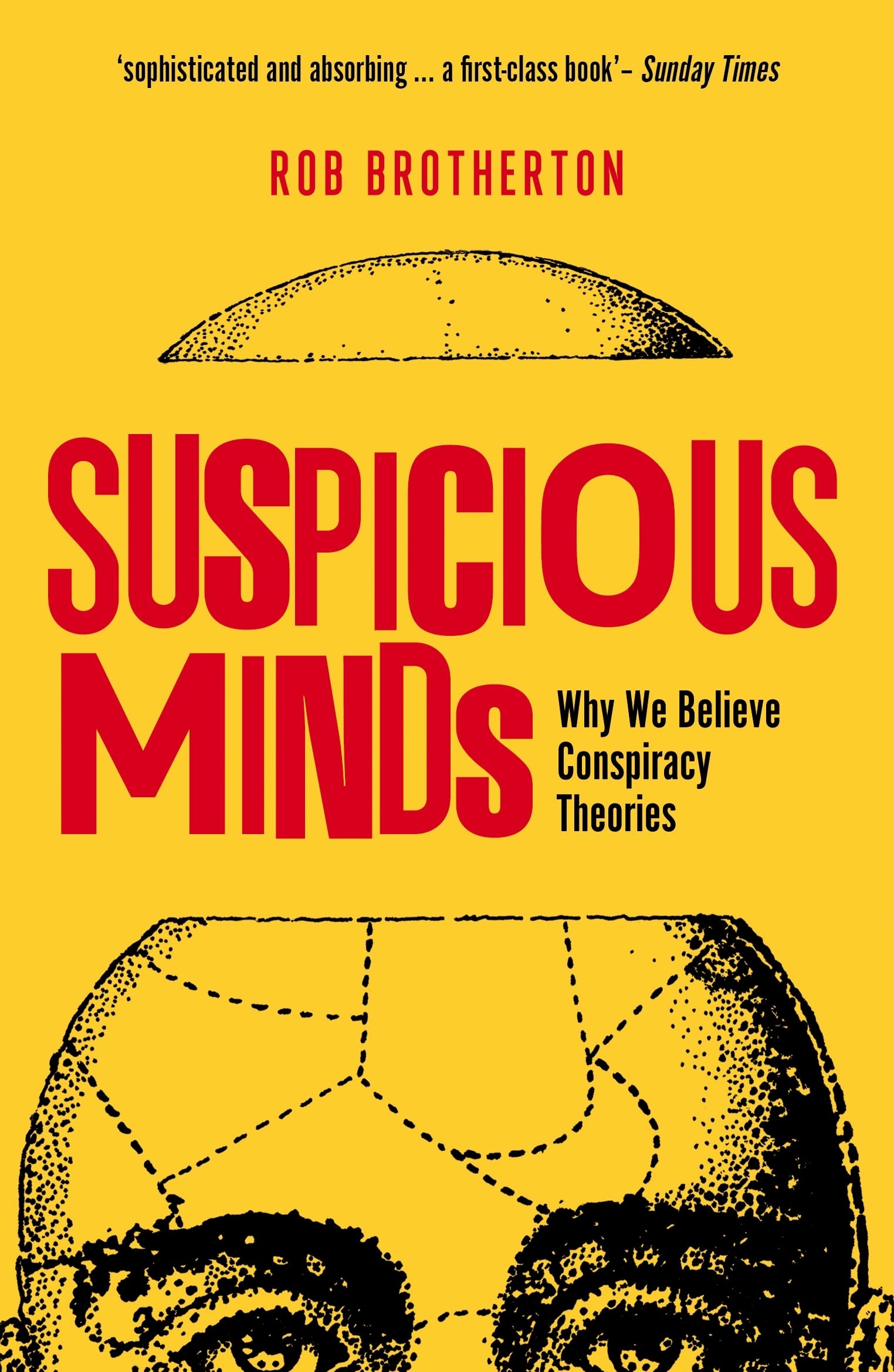
The introductory chapters provide a fairly comprehensive overview of conspiracy theory research. It starts with what they actually are - something surprisingly contentious, especially since the academic definition of “conspiracy theory” doesn’t always match the way we use the phrase in everyday life. It also draws on historical, political, and sociological evidence to show that contrary to popular belief, they are not a modern phenomenon. Conspiracy theories have been recorded throughout history, such as during the Roman Empire and the Great Fire of London, and continue to be relatively widespread today.
There is also a clear explanation of why conspiracy theories can be harmful, with the MMR vaccine being one high-profile case study. However, the book does an excellent job of highlighting that the psychological processes driving belief in conspiracy theories are both normal and helpful. For example, the book explains how cognitive biases (such as incorrectly attributing causality) and social psychological processes (such as our tendency to attribute intentionality where it does not exist) contribute to conspiracy theory beliefs. These are important processes for navigating the world, as they let us identify patterns and understand the people around us. However, they also let us identify actual corruption and conspiracies where they occur.
At this point you might be wondering, “the psychology of conspiracy theories sounds cool, but why should I care?”. The simple answer is that open research has brought new ways that findings can be misused or misinterpreted. It could be incorrect use of the findings of open access publications; less-than-ideal analyses on open data sets; or backlash against fundamental open research values such as equity. If we understand why people believe conspiracy theories, then we can start to think of ways of addressing their relationship with open research practices. Open research and related concepts provide a lot of potential to increase trust in research, which may also reduce conspiracy theorising about our work as researchers. I think we should make the most of that!
So, is the book worth reading? I may be biased, but it’s a resounding yes from me! I think it provides a balanced summary of the cognitive and social psychology of conspiracy theory beliefs. It’s worth noting that the literature it cites is slightly outdated - it was published 10 years ago, after all - but that does not detract from its quality.