Seeds to Systems is a cohort-based training and mentoring programme centred on organisational infrastructure for the sustainability of open research projects and communities. Each week, we share what the cohort sessions covered and some insights and questions they raised.
This week’s sessions
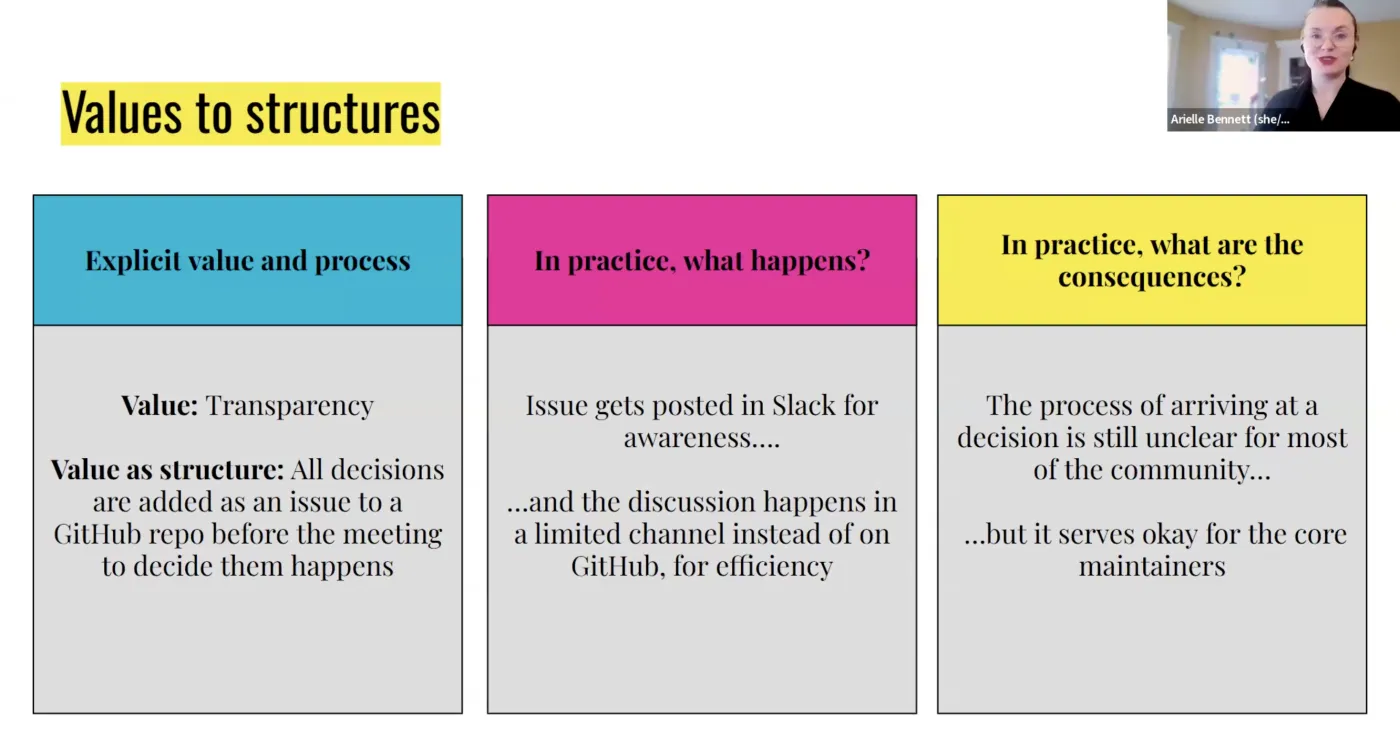
- Session 5: Community infrastructure and decision making: We started by reflecting on what community infrastructure is, and how much of it becomes visible only when something breaks. Arielle Bennett then led a session on the explicit and implicit values and structures that shape how decisions are made in our projects, and on the gap between how decisions are supposed to be made and how they are actually made.
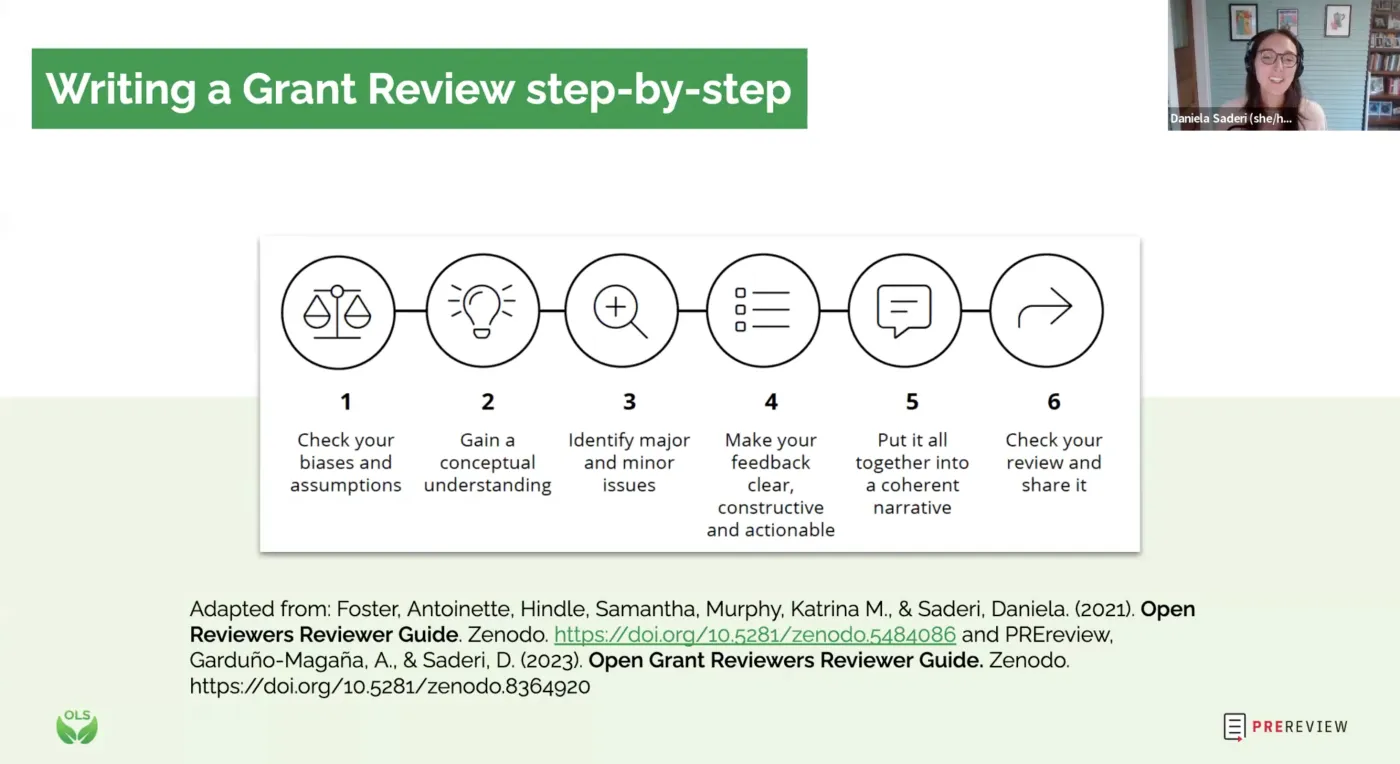
- Session 6: Reviewing grant proposals: Daniela Saderi and Chad Sansing from PREreview introduced how systemic and personal bias can shape research review, and guided us through a live review of a past OLS grant proposal, with a focus on reflecting on what we bring as reviewers and offering feedback that is clear, constructive, and actionable.
Insights and emerging questions
When we asked what comes to mind when thinking about community infrastructure, answers went well beyond tools: roles and responsibilities, communication channels, governance, codes of conduct, onboarding new members, among others. As Susan Leigh Star noted, “the normally invisible quality of working infrastructure becomes visible when it breaks” (1999, p. 382). Many of the examples shared during the session showed what that can look like in practice: when something broke, it often revealed how much of the project’s work depended on specific people, or that responsibilities had never been clearly defined. Arielle Bennett then looked at what remains invisible from another angle. Drawing on Jo Freeman’s The Tyranny of Structurelessness, she reminded us that there is no such thing as a structureless group. When a community does not make its structures explicit, they still exist, but only those already on the inside can see and use them. Implicit structures can work well in some cases, and not every decision needs the whole community. What matters is that people know how decisions are made and how they can be questioned. It also matters whether those structures work as described: what is written down and what happens in practice can drift apart, sometimes without anyone noticing. In our second session this week, Daniela Saderi and Chad Sansing from PREreview guided us through grant review, starting from the idea that every reviewer brings personal and systemic biases to a proposal, shaped by wider systems that also run through research and its funding. Reflecting on what we bring before we start reading can help reduce their impact on our feedback. The next step, reading a proposal to understand it before judging it, was the hardest part for many of us. When it comes to writing feedback, a review can also help strengthen the proposed work, especially when it is clear and actionable, and recognises what already works well. The exercise also brought us back to our first week: without the funding call, it was hard to assess the proposal, because a proposal is always read in relation to what a call asks for. It can be well written and still not respond to it.
These conversations also left us with some open questions: Whose work keeps our community infrastructure running, and is that work visible to the rest of the community? If someone joined our community tomorrow, could they find out how decisions are made, and who makes them? What could reviewing other people’s proposals teach us about writing our own?
Resources
Session recordings and slides will be published on the Seeds to Systems resources page. To go deeper into this week’s topics, you can also explore these links shared during the sessions:
-
Community infrastructure:
- The Ethnography of Infrastructure (Star, 1999)
- MOCHA: How to Assign Responsibilities (The Management Center)
- Right Kind of Wrong: The Science of Failing Well (Edmondson, 2023)
-
Decision making:
- The Tyranny of Structurelessness (Freeman, 1970)
- Governing the Commons (Ostrom, 1990)
- Reviewing grant proposals:
What’s next
Next week, we’ll hear from people working in research funding about how funding calls are designed and what happens behind the scenes of a funding decision. We’ll also look at how outreach and visibility support a project’s sustainability, including how to build a communications plan, and at how open science communities can measure the impact of their work.