Seeds to Systems is a cohort-based training and mentoring programme centred on organisational infrastructure for the sustainability of open research projects and communities. Each week, we share what the cohort sessions covered and some insights and questions they raised.
This week’s sessions
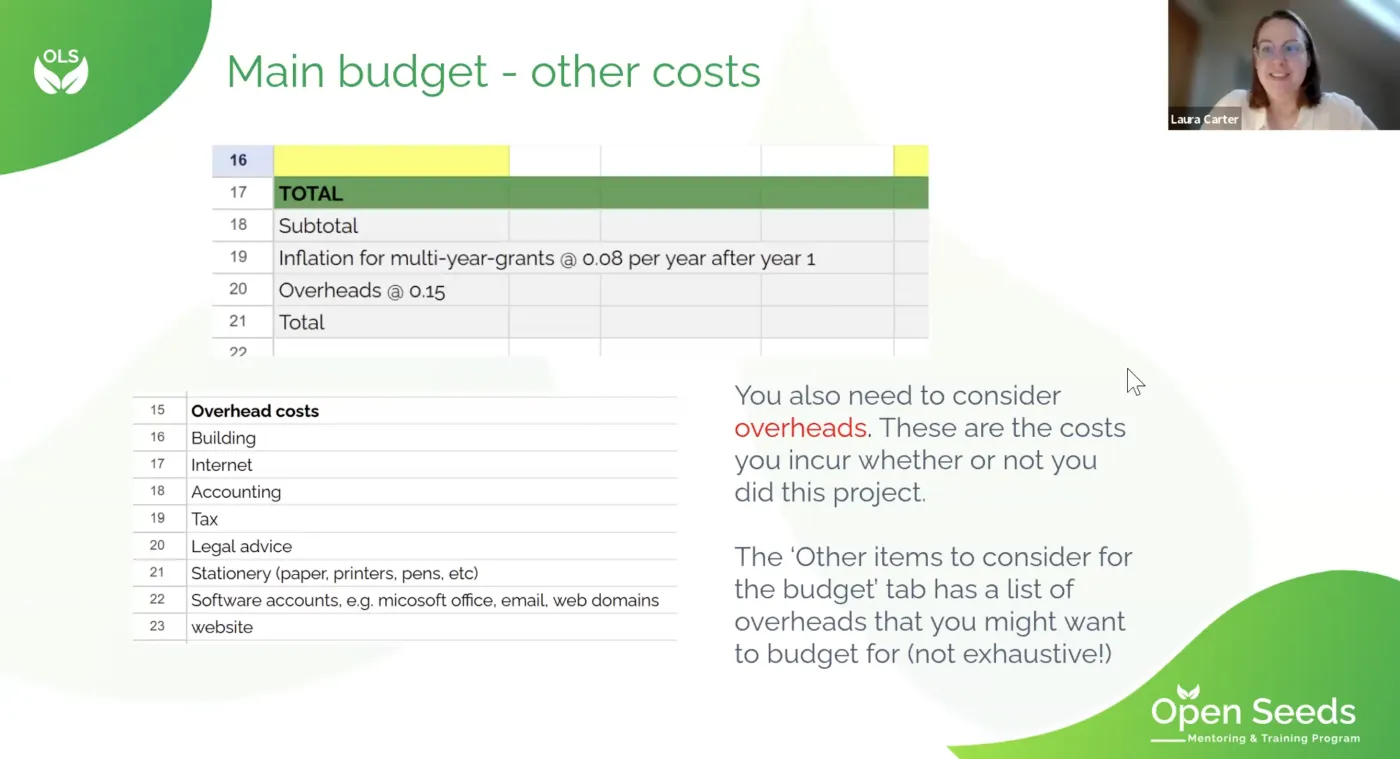
- Session 9: Budgets: Laura Carter (OLS) looked at the costs involved in sustaining a project or community, including those that often go unnoticed, and at how to reflect them in a budget, from staff costs and overheads to working across different currencies.
- Session 10: Writing grant proposals: Taking grant readiness as a starting point, this session looked at how funding calls ask about similar topics in different ways, and at what a community needs to have in place before it can answer them.
Insights and emerging questions
Funding was the focus of both sessions this week. While it is only part of what keeps a project or community going, preparing to apply for it often shows what else a community relies on. In our session on budgets with Laura Carter (OLS), one idea kept coming back: it is crucial to think through all the costs involved in an activity, because the ones left out of a budget still get paid somehow, often with someone’s time or even out of their own pocket. For many open research communities, moving towards funding that can sustain their activities starts with a budget that asks what the labour once carried out by volunteers actually involves: how much time each task needs, how many people are needed to do it, and for how long, along with everything that comes with actually paying for that work. Employing someone, for example, involves costs beyond their salary, such as employer contributions, as well as new needs such as tax or legal advice. Sometimes the most useful thing a budget can show is that a funding call is not worth pursuing. Seeing this before applying can prevent a community from cutting its budget to fit what a call offers, and ending up committed to activities that can only realistically be delivered with unpaid labour, the very situation funding was meant to help it move away from. A budget can also show how much would be left uncovered when a call excludes overheads, the everyday running costs of a community, such as the services needed to manage funds or the digital tools it relies on to work together. Many funders do not pay for these costs, even though most communities depend on them to function. Even if a team decides not to apply, the work is not lost: the budget makes visible what the community’s work really costs, and since the first budget is always the hardest, parts of it can be reused for future applications.
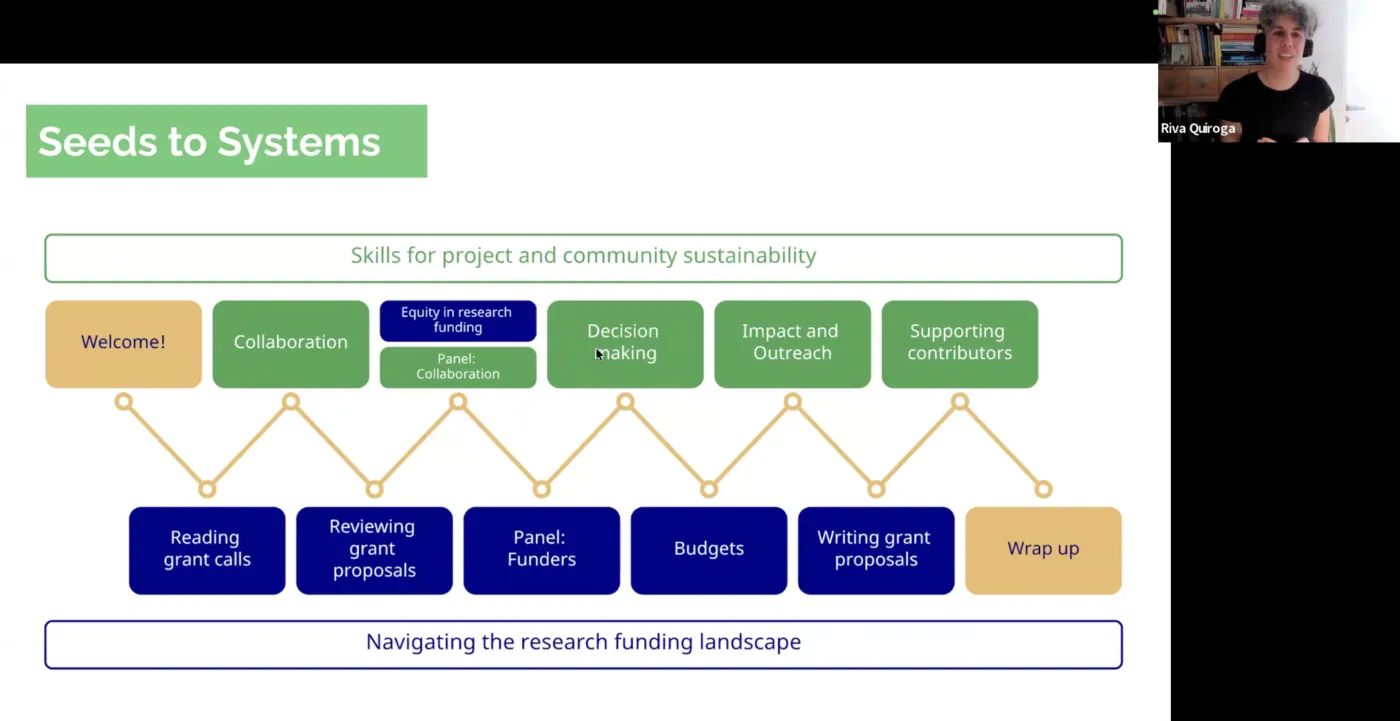
Our second session turned to writing funding proposals, and to what a community needs to have in place before applying, something we have previously referred to as grant readiness. Throughout the cohort, sessions have followed two strands: building the organisational infrastructure that helps a community sustain itself, and navigating the research funding landscape. The two are closely connected: much of that infrastructure, such as collaboration agreements or evidence of a community’s impact, is also what funders want to know about. As last week’s panel put it, funding is a bet, and the questions in a call are ways for funders to weigh it. Asking who is behind a project helps them judge whether the team can deliver what it proposes, something that is easier to show for a community with clear roles and governance. Asking who it serves and what impact it hopes to have helps them see whether its goals align with their own, which is easier to answer for a community that has mapped the people it works with and articulated its theory of change. Since they are all weighing the same kind of bet, funders end up asking about very similar things, with different emphases and in different ways. This makes it possible to prepare in advance, by keeping some key pieces up to date and easy to find, such as a short description of what a community does, a record of its activities and their outcomes, or evidence of the needs it responds to, so they can be adapted to each call. Knowing which of these pieces a community actually has is harder than it seems. Sitting down to answer a question from a call is often what reveals the gaps: a number nobody has been tracking, a document no one can find, or a decision the team has not made yet, any of which can take far longer to sort out than the writing itself. Looking at all of this together makes it easier to see what is ready, what exists but is scattered, and what still needs to be built. It can also show that people in the same team know different things, or do not know where something is kept, a reminder that looking after this information is part of a community’s infrastructure too. Some gaps can be closed by writing something down, while others need something to be built first. Like a budget, an honest look at what a community already has in place can help it decide what to prioritise, whether it is preparing to apply for funding or to build a new collaboration.
These conversations also left us with some open questions:
- When a community has achieved a lot with very little, how can it show funders that past success does not mean it can keep going without support?
- Which costs of taking part in our community are currently being covered by individuals, with their time or their own money, without anyone noticing?
- When the budget we need is much larger than what is available, how do we decide what to let go of?
- When we describe the difference our work makes, how much could we back up with evidence?
- How much of our community’s history and evidence of its work depends on a few people remembering it?
Resources
Session recordings and slides will be published on the Seeds to Systems resources page.
What’s next
Next week, the last of our cohort sessions, we’ll explore how communities can support and recognise volunteer contributors, drawing on community research and on the experiences of other open communities. We’ll then close the cohort sessions by reflecting on what we have explored over these six weeks, before the programme moves into its mentoring phase.